Soft Interaction Control (Soft IC)
CSInstruments Soft Interaction Control: direct force control without lateral force, for stiffness, adhesion and electrical maps of soft samples.
Key features
- Direct force control
- The tip touches each point once with a force set through the cantilever deflection, then lifts away. One parameter; the force follows from Hooke's law.
- No lateral force
- The tip is never dragged across the surface: soft, sticky and loosely bound samples stay intact and the tip lasts longer.
- Quantitative channels
- Topography, stiffness, adhesion and electrical signals from the same touch.
- Soft modes
- Soft MEKA (stiffness, adhesion, Young's modulus), Soft ResiScope, Soft PFM and Soft SThM.
- In liquid
- Soft IC also works in liquid.
Specifications
From Concept Scientific Instruments' product page.
| Contact mode | No lateral forces, less sample damage, longer tip lifetime |
|---|---|
| Resonant (tapping) mode | Force controlled directly with a single parameter, calculated rather than inferred from an amplitude |
Overview
Soft Interaction Control (Soft IC) combines the force control of contact mode with the gentleness of resonant mode. In each point the tip touches the surface with a known force, set through the cantilever deflection, then lifts away before moving on. The force is the same at every point and no lateral force is applied to the sample.
On a PDMS sample, Soft IC maps topography, adhesion and Young’s modulus (1.2 to 10 MPa) in one scan. The same mode carries Soft ResiScope, Soft SThM and Soft PFM, for electrical, thermal and piezoresponse measurements on fragile samples.
Applications include materials science, polymers, semiconductors, 2D materials, biology and energy materials.
Webinars and videos
From the manufacturer's own channels.
-
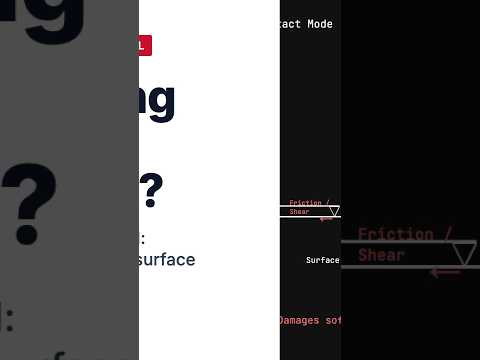
Soft Interaction Control: AFM Imaging Without Lateral Force on Soft Samples Video · Concept Scientific Instruments
Soft Interaction Control: AFM Imaging Without Lateral Force on Soft Samples
-

Soft Intermittent Contact (Soft IC): AFM Imaging with Direct Force Control Video · Concept Scientific Instruments
Soft Intermittent Contact (Soft IC): AFM Imaging with Direct Force Control