
Laboratory-scale electrospinning devices are in demand worldwide as the scope for nanofibres in biomedical applications has expanded tremendously in the last decade. However, only a limited number of enterprises can meet these needs. Currently, INOVENSO Co. is the leading manufacturer of nanofibre production equipment. We offer needle-based, hybrid, single-nozzle, and multi-nozzle electrospinning devices and their accessories as well as needle-less open-surface electrospinning devices. Contact us to discuss your electrospinning needs.
As chosen by the University of Sydney, University of Queensland, UNSW, Deakin University, RMIT University, Swinburne University, Flinders University, Macquarie University, University of Newcastle, University of Wollongong, University of South Australia, University of Adelaide, University of Southern Queensland, and CSIRO amongst 600+ organisations globally.
Biomedical Applications: Evolving Needs
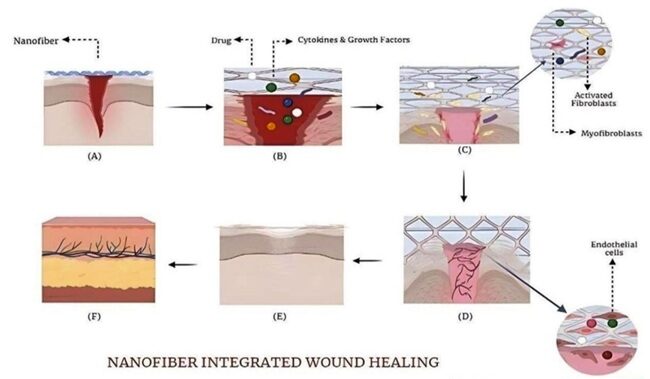
The skin is the body’s largest organ and the primary barrier against harmful external forces and foreign substances. Injuries to the skin can result in wounds that are classified broadly into three types based on their severity – superficial, partial-thickness, and full-thickness, each requiring different treatment strategies. Healing involves a complex biological process of restoring the integrity and functionality of the injured tissue. It is categorised into four overlapping phases: haemostasis, inflammation, proliferation, and remodelling.
Chronic wounds often fail to progress through these stages effectively, demanding advanced therapeutic strategies. Traditional dressings, while effective in covering wounds, often lack the necessary properties for optimal healing. An ideal wound dressing must absorb exudate, prevent microbial infection, maintain moisture, permit gas exchange, and be non-toxic, biocompatible, degradable, and easy to maintain and replace.
Advanced non-surgical therapeutic approaches involve the use of synthetic and natural materials in dressings that support drug delivery, re-epithelialisation, and infection prevention. These include topical formulations containing anti-microbial solutions and agents like collagenase and dexpanthenol that actively promote tissue repair.
Benefits of Nanofibres
Electrospun nanofibres, with diameters ranging from nanometres to micrometers, are known for their high surface area-to-volume ratio, microporosity, biodegradability, and mechanical strength. They signify a disruptive potential for use in biomedical & pharmaceutical applications, effectively meeting the growing need for innovative and affordable healthcare solutions. The adjustable physical and mechanical properties of nanofibres make them highly versatile due to the following features:
- Resemblance with Extracellular Matrix (ECM) of human tissue: Nanofibre membranes mimic the structure and function of the ECM, providing a supportive framework that promotes cell growth and wound repair.
- Porous structure: Opens up targeted delivery capabilities, such as loading and controlled release of biologically active compounds that promote tissue regeneration.
- Biocompatibility: Use of natural polymers prevents infection due to their biodegradability and significantly reduces healing time without additional intervention, meeting the expectations of patients with minimal scarring.
- Precision in customisation: Precise control of process parameters to synthesise nanofibres of desired mechanical and chemical properties for specific therapeutic requirements.
- High encapsulation efficiency: Possibility to design drug delivery products such as core-shell, hollow, and bi-component polymer structures of sub-micron diameters, fine-tuned for clinical efficacy.
Inovenso’s Advancements in Electrospinning
Inovenso’s patent-pending Open Surface Technology represents the most efficient and scalable approach to producing advanced nanofibre meshes. It is a novel electrospinning method that enables high-throughput production of nanofibre meshes used in multiple applications. Its modular, customisable design, unique open-surface spinnerets, and advanced feeding systems make it suitable for both product development and industrial manufacturing with a wide range of materials.
Nanofibre media can also be engineered using Inovenso’s needle-based, patented Hybrid Electrospinning Technology, where fibre characteristics can be finely tuned by adjusting critical parameters to obtain nanofibres with controlled diameters and performance characteristics. Inovenso has overcome the challenge of low-throughput with its multi-nozzle hybrid system, which features a unique reservoir-based design offering production rates four times higher than standard needle-based systems.
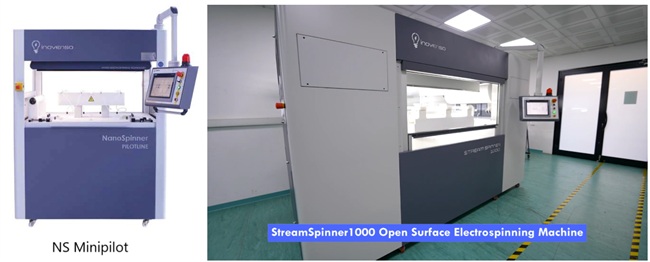
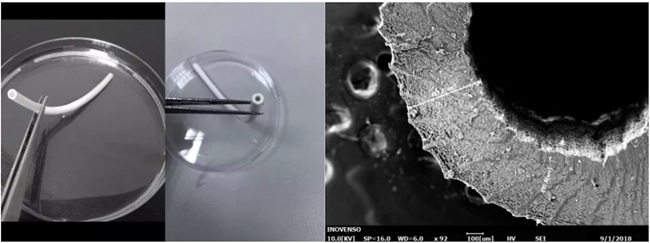
The Nanospinner series is quite versatile and provides lots of additional modules for customising the process, such as the production of core-shell, hollow, and bi-component nanofibres morphologies widely used in drug delivery systems. It is also used in the production of tubular nanofibres as artificial blood grafts, with the special usage of rotating shaft collectors. Models like the NS Minipilot are also equipped with multi-nozzle feeding that enables round-the-clock high production rates of membranes.
The field of biomedical applications is vast and continuously changing at a breakneck pace. Companies might find it difficult to keep up with state-of-the-art methods, techniques, and materials involved in the design and production of nanofibre media for the above applications. Inovenso’s experienced R&D team offers end-to-end support for developing products that are old and established, as well as new and innovative. Services include material selection for desired properties, IP-aware tech transfer, and custom scaffold design for applications like wound dressings, tissue regeneration, and drug delivery. They also provide contract-based mass production using industrial-scale electrospinning systems tailored to clients’ needs and specifications, aimed at accelerating their projects with cost-efficiency and speed. For a full list of R&D services, click here.
Applications of Nanofibres in Medicine
Wound Dressings
Nanofibre membranes replicate natural ECM, absorb exudate, release drugs, and prevent microbial invasion. The combination of synthetic and natural polymers enables optimal moisture retention and promotes cell adhesion and proliferation. Advancements include multifunctional fibres with staged drug/growth factor release and electronic monitoring.

Sutures
Nanofibre sutures incorporate antibiotics or growth factors, reduce inflammation, combat infection, and promote healing through sustained drug release typically from core-sheath or twisted structures.
Dermal & Epidermal Substitutes
Nanofibres influence adhesion, proliferation, and differentiation of keratinocytes, fibroblasts, and melanocytes through integrin pathways and topographic cues. 3D nanofibre scaffolds enable skin regeneration by supporting cell penetration and vascularisation, which are traditionally limited in 2D membranes. Using either skin cells or stem cells, electrospun scaffolds can mimic the tensile and elastic properties of skin. Factors involved in this production are raw material selection, incorporation of inorganic elements, and post-processing (e.g., thermal treatment). This leads to high healing efficiency, faster epithelial coverage, control of infections, regulation of cytokine and growth factor activity, aid in angiogenesis, and ECM production. ‘Sandwich-type’ grafts with micro-skin islands and structured nanofibre layers are seeded with keratinocytes or fibroblasts to encourage re-epithelialisation and dermal repair.
Biosensors
Integrated nanofibre sensors monitor pH, glucose, temperature, and infection status, allowing real-time diagnostics through wearable patches.
Drug Delivery Systems
Electrospun nanofibres enable high encapsulation efficiency and targeted delivery of therapeutics. Core-shell and hollow structures enhance delivery kinetics while preserving drug stability.
Neutraceuticals
Electrosprayed nanofibres have been recently found to enhance the bioavailability and functionality of neutraceuticals. Their precision, scalability, and eco-friendliness make it suitable for supplement and food industries aiming for controlled and targeted release of multi-functional, stable, and efficient nutrient formulations. Customisable morphologies (e.g., 2-layer or multi-shell structures) allow simultaneous encapsulation of multiple active compounds, while protecting them from degradation (e.g., oxidation, heat, moisture). It is also an eco-friendly & cost-effective method, because it uses water-based solutions and minimal energy, and reduces the need for solvents or complex purification steps. The production can be adapted to multi-nozzle or open-surface configurations, suitable for large-volume industrial-scale manufacturing.
Artificial Blood Grafts and Medical Implants
Blood grafts can be produced by very thin rods that continuously rotate, while the impinging solution creates thin tube-like structures for implementation in arteries.
Case Studies – Specific Applications of Nanofibres
Coaxial Nanofibre Dressings with Propolis1
Utilising coaxial electrospinning, a PLA/PBS blend incorporated raw propolis for wound dressings with antimicrobial activity. The structure of a hydrophobic shell with an absorbent core efficiently mimicked moist wound healing environments. While highly effective against Staphylococcus aureus, the study points the way to future use of purified extracts for ensuring biomedical safety and avoiding cytotoxicity.
AMOX-Loaded Nanoparticle Fibres2
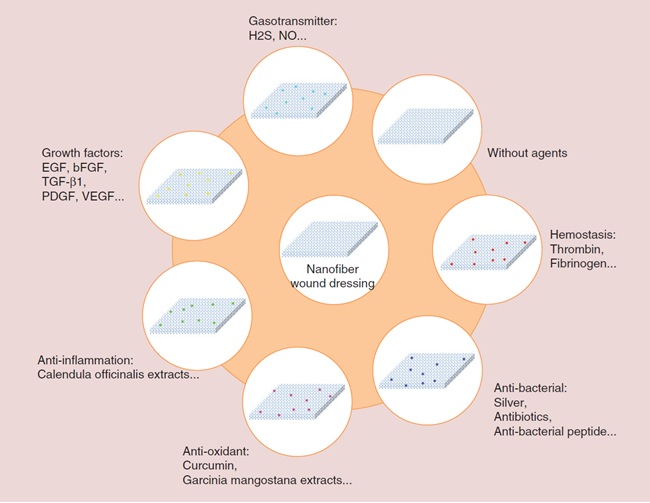
A wound dressing using PVA and SA with AMOX-loaded MIP nanoparticles demonstrated high biocompatibility, ECM mimicry, angiogenesis induction, and sustained drug release, outperforming commercial alternatives.
Source: Chen et. al, Nanomedicine (Lond.) (2017) 12(11), 1335-1352
Natural Extract-Infused Nanofibres3
- Soy Protein/PCL/Chitosan nanofibres loaded with ZIF-8 and essential oils show strong antimicrobial and clotting activity, enhancing wound repair.
- Nigella sativa (Black Seed) and Ajwain oil integrated into hybrid mats offer powerful antibacterial effects with biocompatibility and sustained drug release.
- Propolis, Clove Oil, Neem, Zataria multiflora, and Henna exhibit potent antibacterial and antioxidant effects when embedded in PCL, CA, or gelatin-based fibres.
- Satureja mutica & Oliveria decumbens essential oils used in core-shell structures amplify antioxidant and antimicrobial responses, ideal for dry wounds.
Botanical Scaffolds and Regenerative Aids3
- Alfalfa-infused PCL composites demonstrate super-hydrophilic behaviour and high healing outcomes.
- Curcumin embedded in gelatin matrices overcomes bioavailability issues while aiding fibroblast migration and microbial defence.
- Aloe vera and Hypericum perforatum oils promote diabetic wound healing and reduce oxidative stress in polymer mats.
Stem Cell-Seeded Nanofibre Meshes3
- ADSCs, BMSCs, ESCs, and hEnSCs seeded onto nanofibre scaffolds support angiogenesis, immune modulation, and tissue remodelling.
- Materials such as PCL, collagen, and silk fibroin provide excellent platforms for cell integration and therapeutic regeneration.
Future directions in the field include advancements such as smart drug release systems responsive to biochemical cues (e.g., vitamin D-triggered antimicrobials), integration of electronics for diagnostics and targeted therapy, combination of 3D printing with electrospinning for customisable skin constructs, etc.
Contact NTS for queries on products and technologies suitable for specific biomedical applications and requirements in both R&D and industrial-scale operations. We look forward to guiding you with expertise, infrastructure, and support to accelerate innovation!
Sources:
[1] Ozdilek et.al, Macromol. Mater. Eng. 2025, 2400321
[2] Cerci et.al, Polymers for Advanced Technologies, 2025
[3] Kotteeswaran et.al, Biomedical & Pharmacology Journal, September 2024